
Every child deserves to experience the wonder of science and the satisfaction of engineering.
K. Renae Pullen
STEM education is often perceived as objective and neutral, but this assumption overlooks the deep-rooted systemic racism and eurocentric biases embedded within its curriculum.
Every child possesses an innate curiosity about the world, making the early years an ideal time to introduce the wonders of science and the satisfaction of engineering. Leveraging this natural inquisitiveness, educators can create meaningful learning experiences that position young students as active thinkers and doers of science, laying a strong foundation for future learning and informed decision-making. Despite the importance of early science education, it remains under-resourced, particularly impacting historically marginalized students.
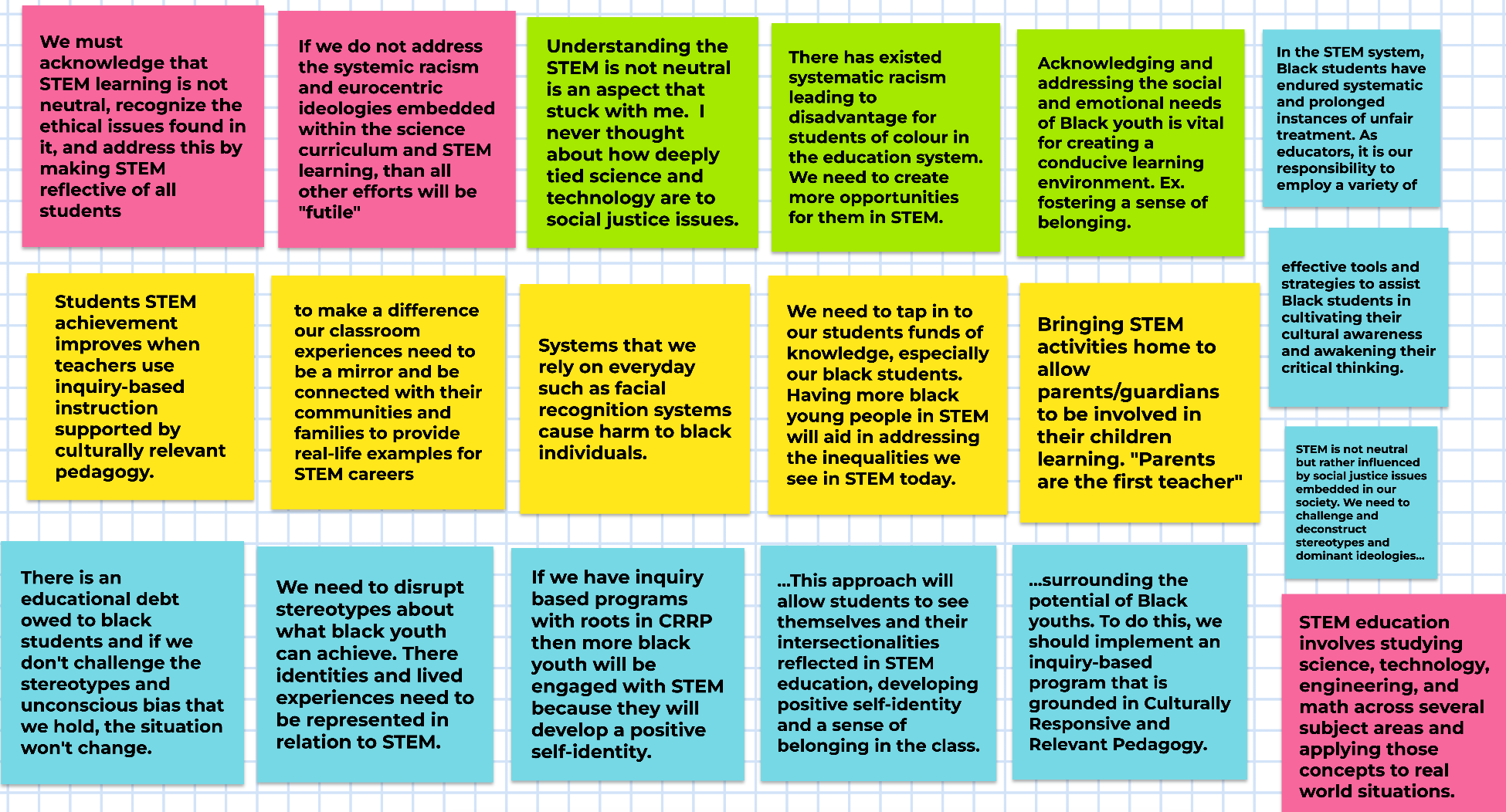
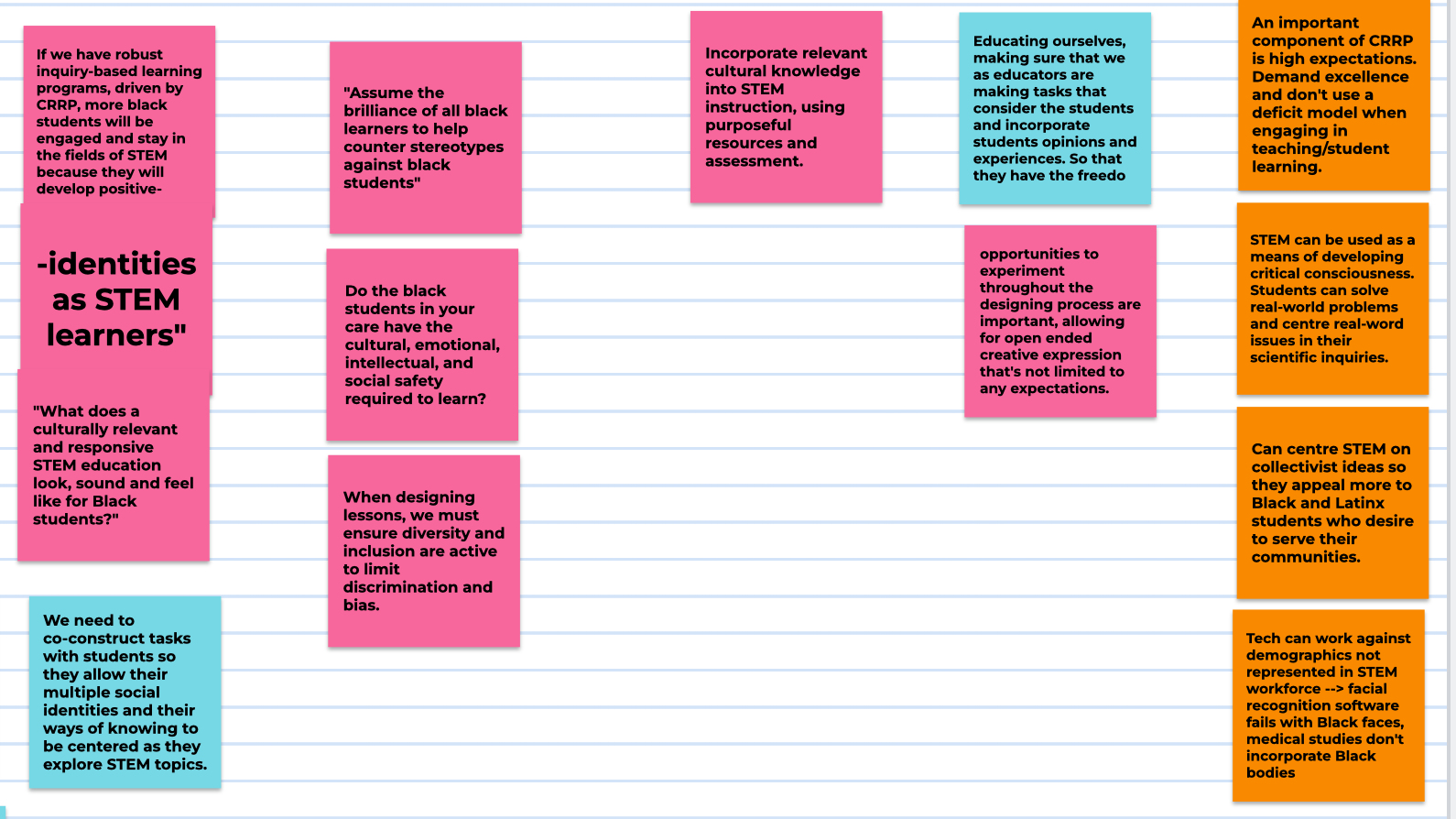
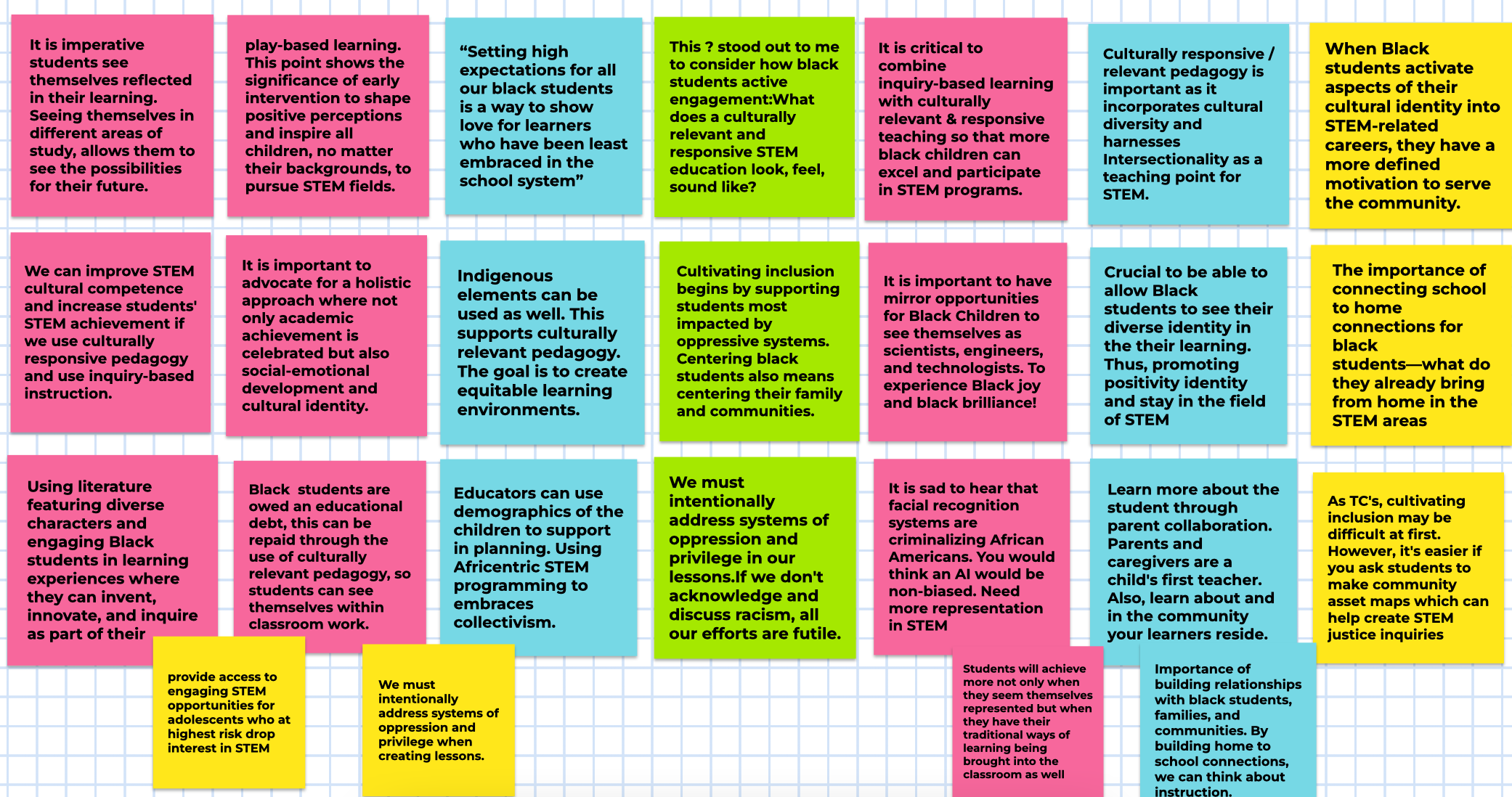
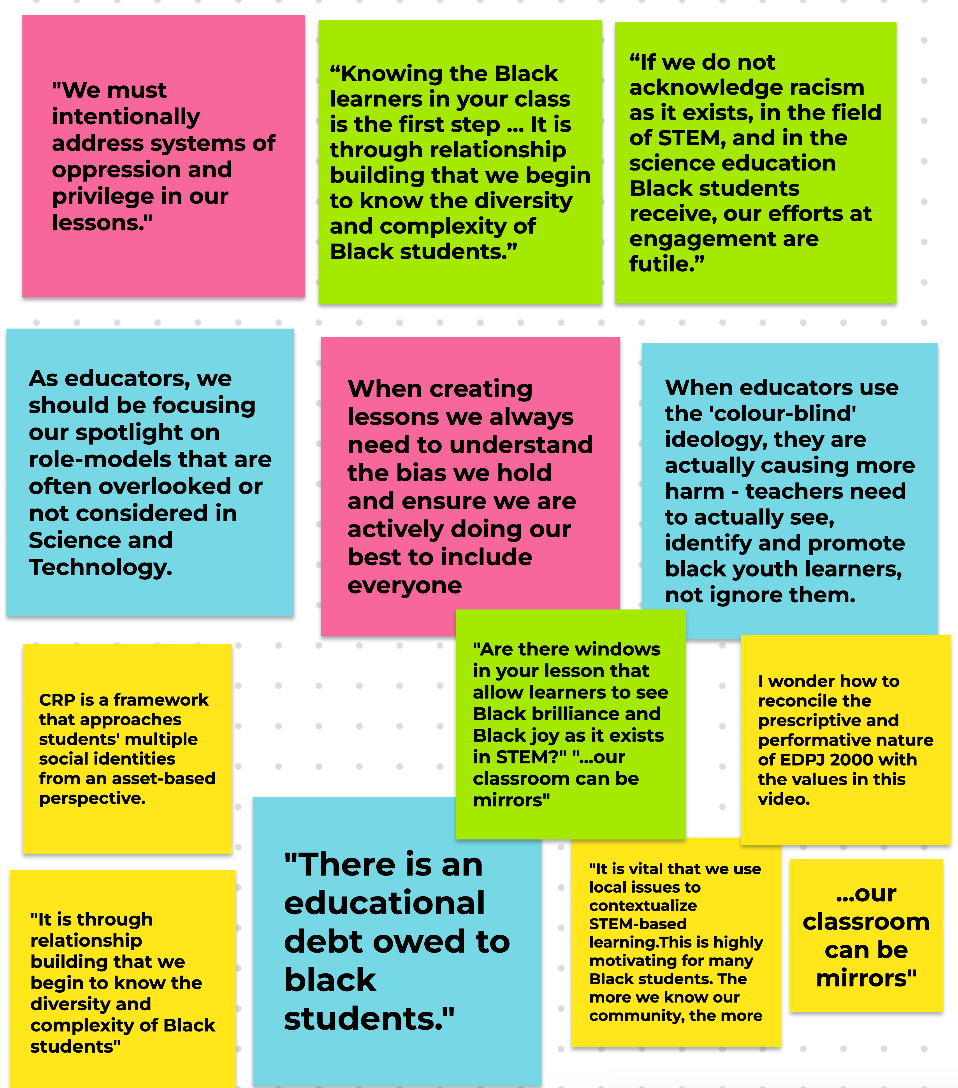
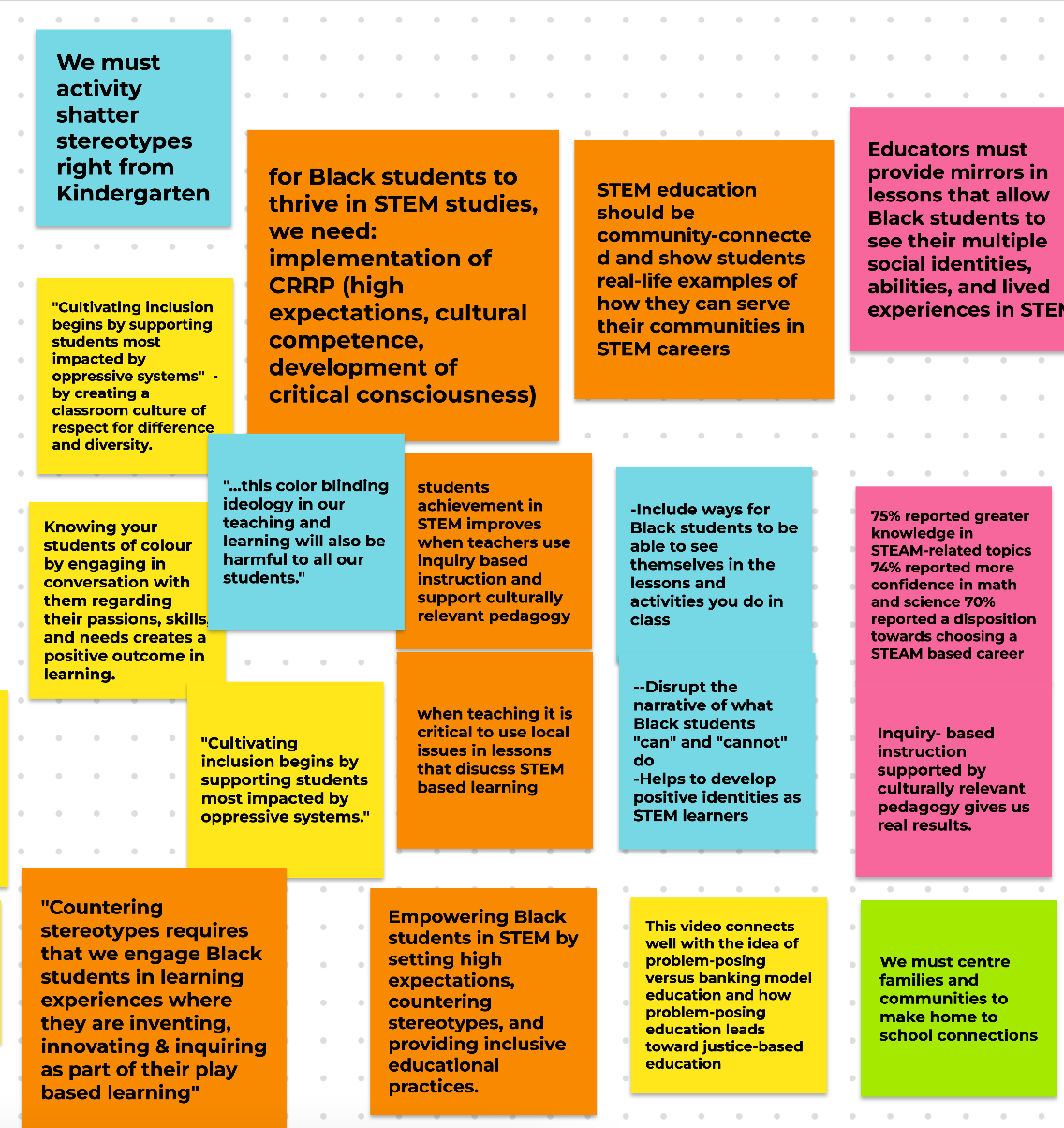
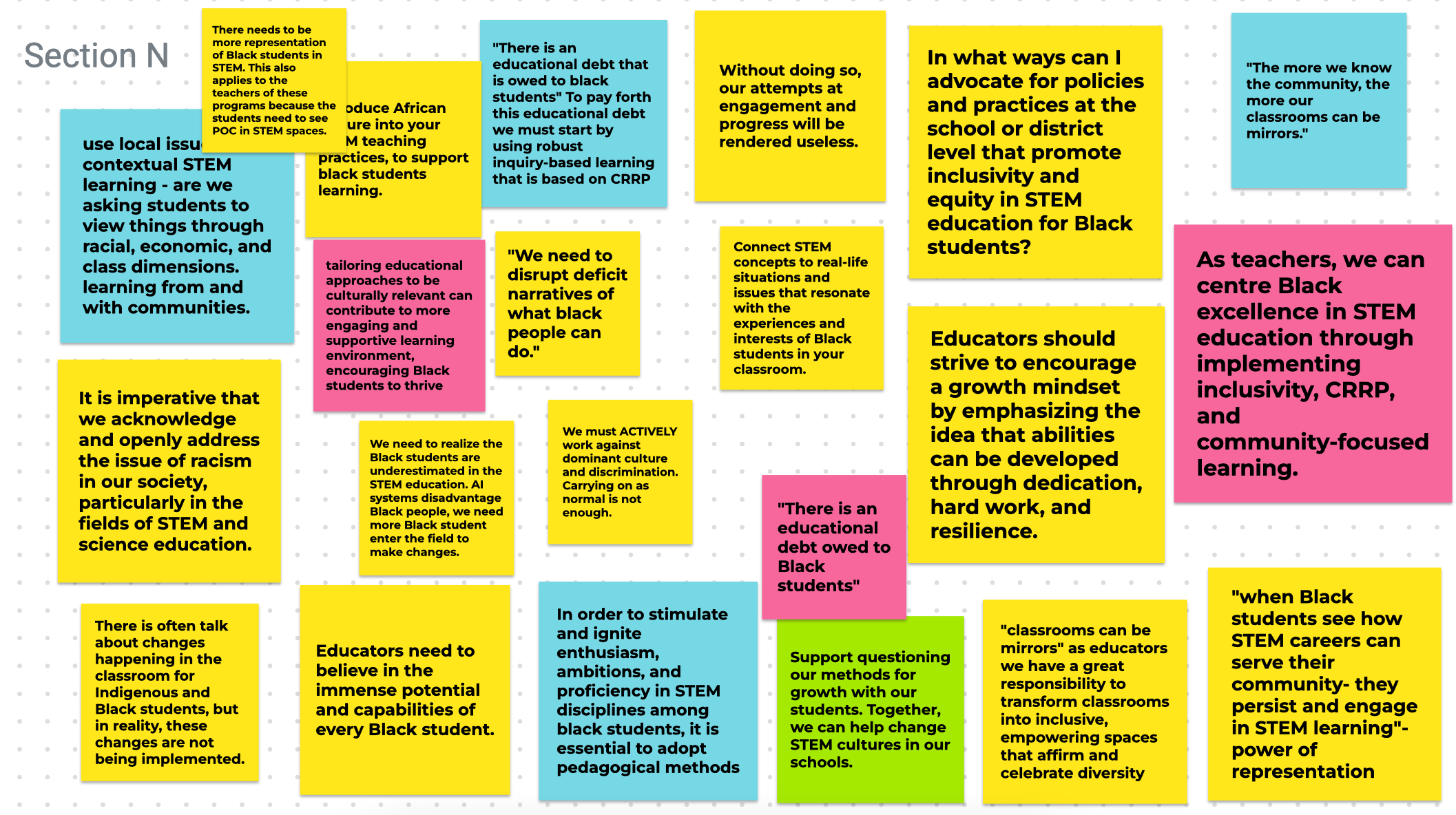
Source: Jamboard: What sticks?
Addressing these issues is crucial, as efforts to engage all students in STEM will be futile without acknowledging and confronting the inherent inequalities.
For Black students, in particular, the education system has perpetuated disadvantages through both explicit and implicit biases. By adopting inquiry-based instruction supported by culturally relevant pedagogy, educators can foster a more inclusive environment. This approach not only helps Black students develop a positive self-identity but also ensures that their cultural backgrounds and lived experiences are reflected in their learning. Creating equitable opportunities in STEM is essential to disrupt harmful stereotypes and inspire all students to see themselves as future scientists, engineers, and technologists.

Uncovering the Brilliance of Black Students in Science Education
Science education holds the promise of unlocking the innate curiosity and potential of young learners, yet it remains under-resourced and inadequately addressed, particularly in early childhood and elementary grades. For Black students, these disparities are exacerbated by systemic racism and biases that pervade the educational system. To truly uncover the brilliance of Black students in science education, we must implement strategies that recognize and harness their natural curiosity, provide robust support for educators, and create an inclusive and equitable learning environment.
Natural Curiosity and Early Engagement
Young children are naturally inclined to explore, observe, and make sense of the world around them. This intrinsic curiosity makes early childhood an ideal time to introduce science and engineering concepts. Leveraging this curiosity can help lay a strong foundation for lifelong learning and problem-solving skills. When children engage in science activities that are relevant and meaningful to them, they are more likely to see themselves as capable thinkers and doers of science. This early engagement is particularly crucial for Black students, who often face additional barriers in STEM education due to systemic biases.
Addressing Systemic Inequities
Historically marginalized students, including Black students, frequently encounter obstacles in their educational journeys. Systemic racism and eurocentric biases within the curriculum further disadvantage these students, limiting their opportunities to excel in STEM fields. Addressing these inequities requires a concerted effort to deconstruct stereotypes and dominant ideologies that underestimate the potential of Black students. By implementing culturally relevant pedagogy and promoting an inclusive curriculum, educators can ensure that Black students see themselves reflected and valued in science education.
The Role of Educators
Preschool and elementary teachers play a pivotal role in shaping the educational experiences of young learners. While they may lack extensive preparation in science and engineering, they bring invaluable strengths to the classroom, such as relationship-building, creating engaging environments, and understanding child development. To effectively teach science, educators need comprehensive support across their preservice and professional careers. This support includes professional learning experiences, access to high-quality curriculum materials, and both physical and digital resources.
High-Leverage Strategies for Engagement
To uncover the brilliance of Black students in science education, teachers can employ several high-leverage strategies. First, designing instruction around interesting and relevant phenomena can captivate students’ natural curiosity. Establishing norms for a caring, collective culture helps create a supportive learning environment where all students feel valued and included. Positioning children as active thinkers and doers allows them to take ownership of their learning and engage in meaningful scientific inquiry. Using formative assessments to gather multiple forms of evidence at various points in time helps inform instruction and address the diverse needs of students.
Content Integration
Integrating science with other subjects, such as English Language Arts, Mathematics, Social Studies, Computational Thinking, and Social-Emotional Learning, can enhance instructional time and make learning more comprehensive. Content integration respects the unique content and disciplinary practices of all domains while leveraging meaningful connections among subject areas. This approach is particularly powerful when it is developmentally, culturally, and linguistically appropriate, ensuring that Black students can relate to and benefit from the integrated learning experiences.
Leadership Development
Educational leaders and administrators also need professional learning opportunities to enhance their capacity for providing instructional leadership and support for science and engineering education. By focusing on the science and engineering practices, leaders can support teachers in seeing the multiple ways in which science and engineering are valuable for children. This leadership is crucial in promoting an inclusive and equitable learning environment that supports the success of all students, particularly those who have been historically marginalized.
Support for Black Students in STEM
To improve STEM outcomes for Black students, it is essential to address systemic biases and promote culturally relevant pedagogy. This includes recognizing and valuing the cultural backgrounds and lived experiences of Black students in the science curriculum. By creating opportunities for Black students to see themselves reflected in their learning, educators can help them develop a positive self-identity and a sense of belonging in the field of science. This approach not only improves academic achievement but also empowers Black students to pursue STEM careers and contribute to addressing inequalities in these fields.
Uncovering the brilliance of Black students in science education requires a multifaceted approach that leverages their natural curiosity, provides robust support for educators, and creates an inclusive and equitable learning environment. By addressing systemic inequities and promoting culturally relevant pedagogy, we can ensure that Black students see themselves as capable thinkers and doers of science. This not only lays a foundation for their future learning and decision-making but also empowers them to become informed, innovative contributors to the field of science. As educators, leaders, and communities, we have a collective responsibility to support and nurture the potential of every student, especially those who have been historically marginalized, to thrive in the world of STEM.
Resource
More readings here, here, and here.
Further resources here (Durham Catholic DSB), here (University of Toronto Elementary School Programs), and here (Ontario Integration with Black History Learning)
Reference
Pullen, K. R. (2022). Uncovering the Brilliance of Children: Science in Elementary. https://stemtlnet.org/theme/june2022-introblog.html
Amdemichael, T. (2022). Black Youth Thriving in STEM: Setting Optimal Conditions for Deep Learning. https://www.youtube.com/watch?v=UkIXXQTEGMs&list=PLWJ3p5pi7LDEls45dP4MCQlT-xWM1t59q&index=15
 ralvarez.ca